

Cambridge Road
Martinborough
Facts.
Scale: 2.2 hectares
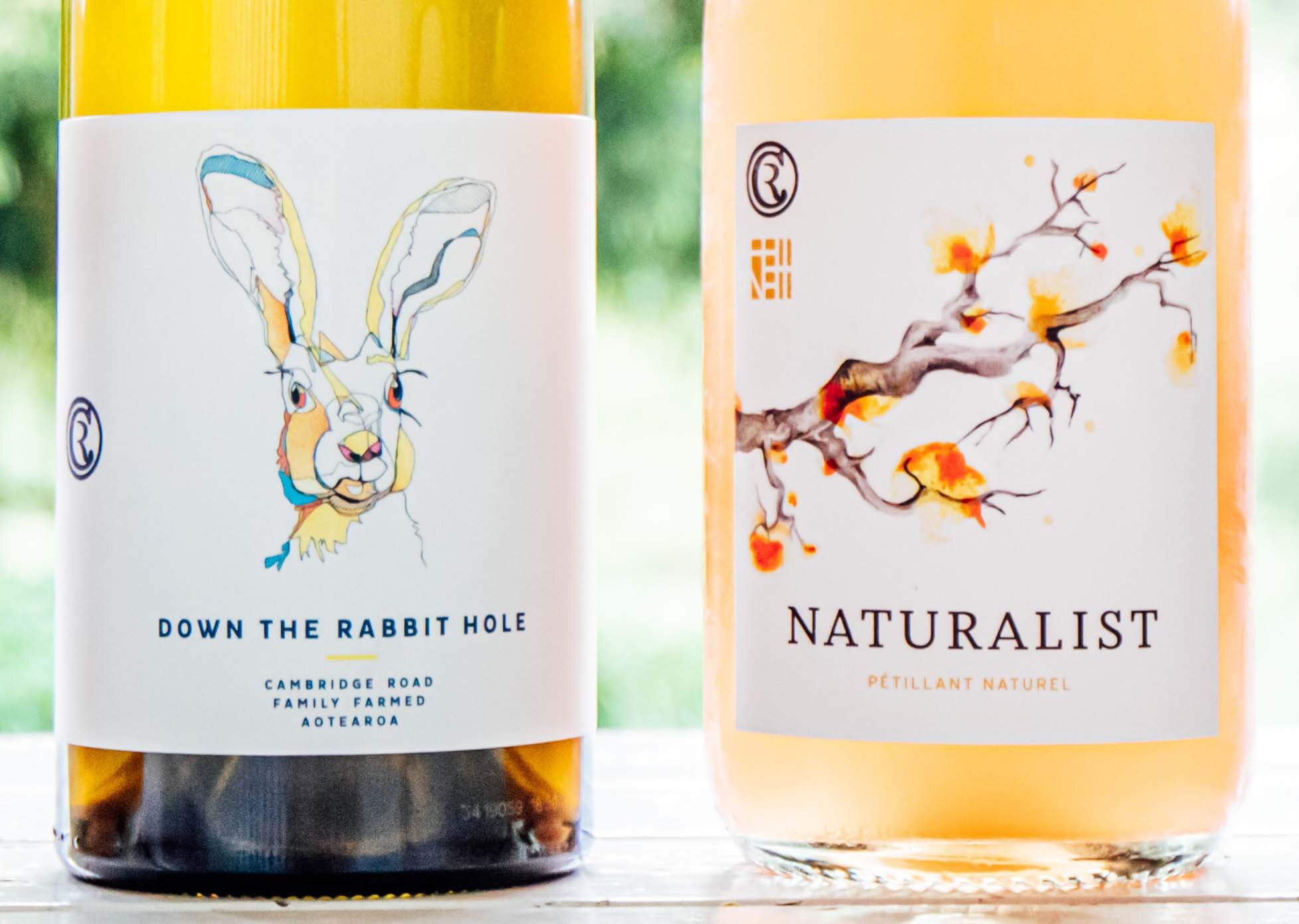
Range: Reserve Pinot Noir, Reserve Syrah, Dovetail, Naturalist Rosé, Naturalist Blanc, Naturalist Peche, Nouveau Red, Rose of Venus, Down the Rabbit Hole, Under Your Skin, Syrah Nouveau.
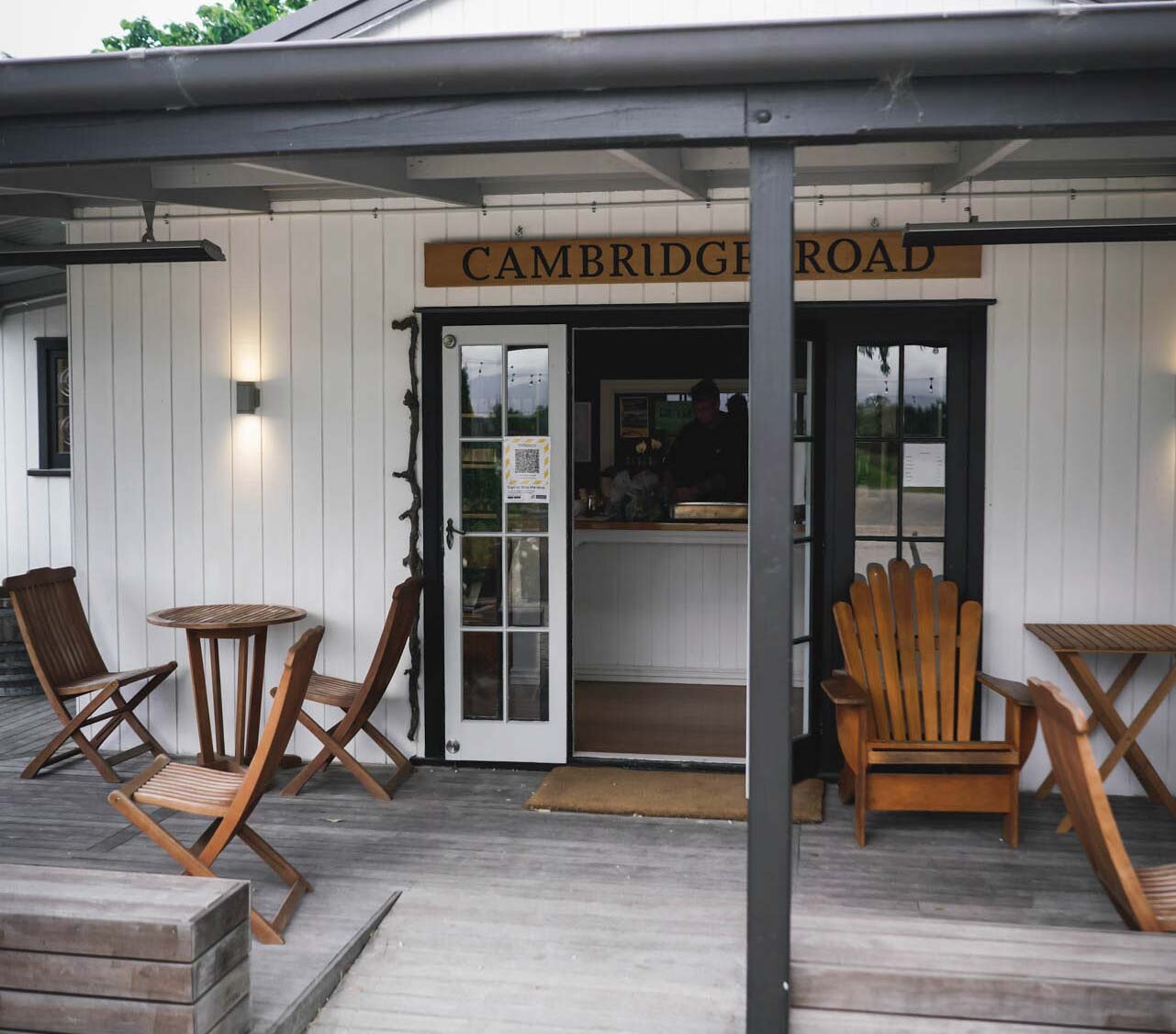
Tasting Room: Yes! Pop in for a platter of locally sourced cured meats, cheeses, olives served with bread from the local baker (Vegan and Vegetarian options available!) and a tasting, glass or bottle of wine or two with friends.
“Today we practice sensitive minimalist agriculture – by that I mean we attempt to intervene as little as possible to allow the vines their natural balance and reflection of season and soil.”







About
Cambridge Road is a 2.2-hectare vineyard of Pinot Noir and Syrah located on the Martinborough Terrace. In addition to their home block, they thoughtfully source small parcels of fruit from three other sites around Martinborough.
South of the village sits their aromatics block, positioned on a very stony alluvial edge shaped by an ancient river system, drawing on deep, time-worn geology. A few kilometres further south lies another site on a steep, sun-drenched hillside, with a subsoil of wind-blown loess that benefits from long, gentle evening light. To the north, a tiny hillside block sits at higher elevation on fossilised shell-rich soils, adding further complexity and contrast.
Cambridge Road focuses on identifying sites with the best geology and exposure, carefully selecting each small block and maintaining sustainable, low-intervention practices throughout.
“I look forward to developing other sites in the future that tap into the best geology and exposure our part of the world can offer. We hope you take some time to explore our work and that it finds a place in your heart as it has in ours.”
— Lance, Founder and Winemaker
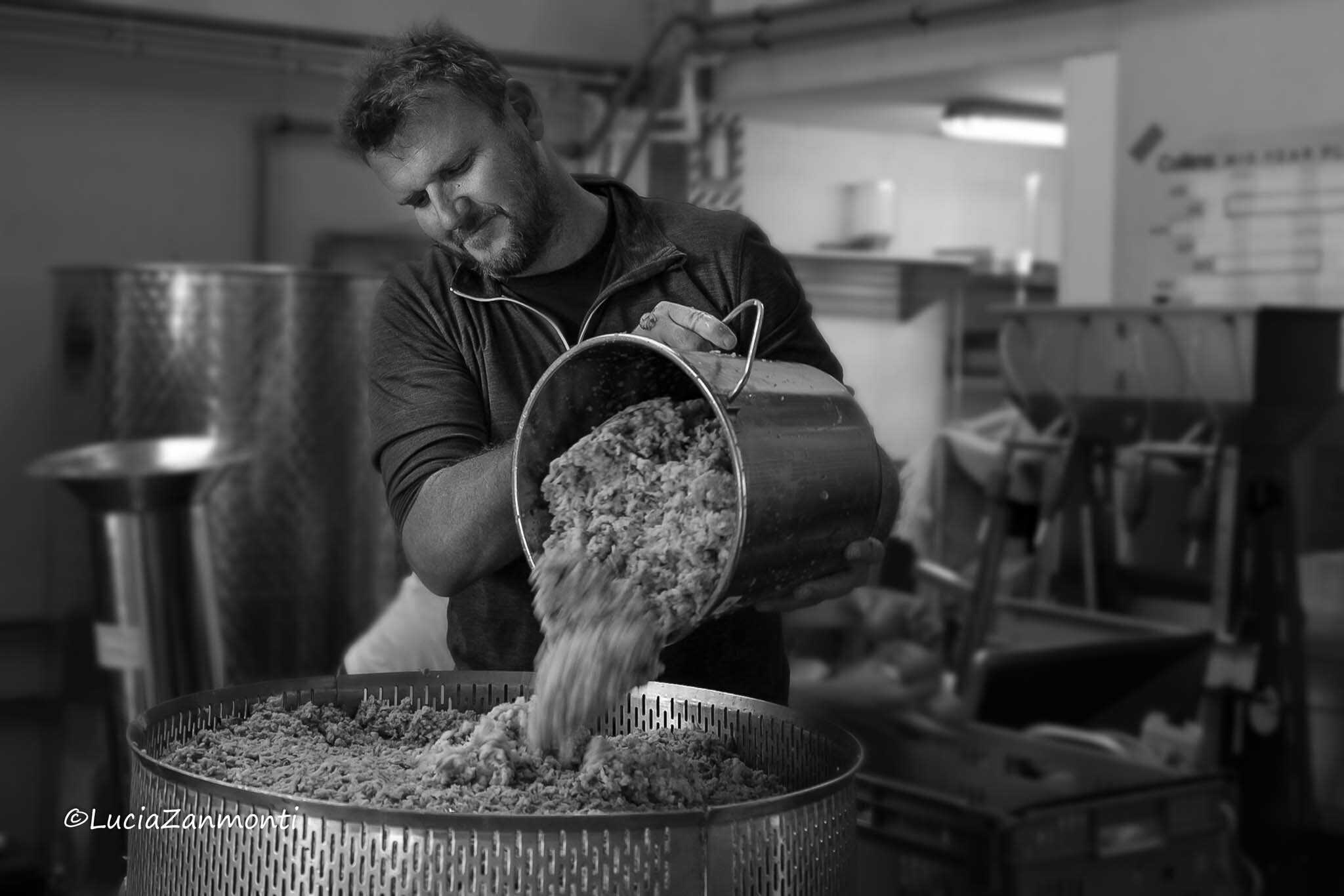
Lance produces low-intervention wines, using almost no sulphur additions and no other inputs of any kind.
“Our wines today are simply the honest, living reflection of fruit fermented by nature and bottled with nothing added or stripped away. My reasons are simple: clean-farmed organic fruit is fundamental to a wine’s potential to be healthy for human consumption. Once fermentation occurs with a diverse population of natural microflora, including lactobacillus, we choose not to filter these away. In the same way beneficial anthocyanins are intrinsic to red wine, we embrace skin and seed extraction in many white varieties, increasing their tannic structure and antioxidant qualities. These methods also allow us to largely avoid sulphur additions, which can be problematic for some consumers.”
— Lance

